
If you want to first understand the meaning of Real estate development Its stages and the role of the developer from market study to implementation and delivery, see the main manual. This page deals with the classification of types of real estate projects, the differences between them and how to choose the most appropriate type.
What are the most important types of real estate development?
Highlights can be divided Types of Real Estate Development According to the use to:
- Residential development: Apartments, villas, communities and residential compounds.
- Commercial development: Shops, malls, retail centers and services.
- Office Development: Offices, corporate headquarters, business centers.
- Medical and Institutional Development: Clinics, medical centers and some service projects.
- Mixed-use development: Combine two or more uses within one project.
- Hospitality Development: Hotels, resorts and hospitality products.
- Industrial and Logistics Development: Factories, warehouses, distribution centers.
- Land development and redevelopment: Processing of land or development of an existing asset and its reuse.
The choice of the appropriate type is made only after studying the use of the land, the public, demand, competition, cost, financing and operational requirements.
How are the types of real estate development classified
Development projects can be classified in two main ways, and it is important to differentiate them so as not to get confused Project usage AndMethod of origin development.
First: classification according to the use of the property
It is the most common classification, it includes:
- Residential.
- Commercial.
- Administrative.
- Medical and service.
- Very versatile.
- Tourist and hotel.
- Industrial and logistic.
Second: classification according to the method of development of the asset
- New land development:
Create a project from scratch on an unbuilt land. - Construction on serviced land:
Develop a plot within an area where roads and facilities are available. - Redevelopment:
Make a material change to an existing asset or site to reach a more convenient use. - Rehabilitation:
Improvement of an existing building while retaining a significant part of its structure. - Change of use:
Convert the functionality of the asset from one use to another if the conditions and licenses allow. - Phased development:
The implementation of the project on more than one stage related to the market, financing and implementation.
Thus the project can be Residential in terms of use At the same time Redevelopment project In terms of the method of intervention at the origin.
Residential real estate development
Concentrate Residential Development To provide units for individuals and families, it includes apartments, villas, duplexes, townhouses, residential buildings, compounds and integrated communities.
The presence of a general demand for housing is not enough to judge the success of the project; it is necessary to determine the type of Target family, its purchasing power, the spaces you are looking for, the required services, the timing of delivery, the level of expenses and maintenance.
The most prominent types of residential projects
Buildings and small residential projects
They are usually held on a specific plot within a neighborhood or urban area, and include a limited number of units. Its success depends on the quality of the site, the distribution of space, accessibility, facilities and price compatibility with the local market.
Compounds and residential communities
It includes a group of buildings or villas within a single plan, and may include green spaces, parking, services and organized entrances.
And here the density, specificity, mobility, the cost of managing services and maintenance should be studied, and not just increase the number of facilities within the project.
A guide can be found a compound in New Damietta To understand this genre in more detail.
Villas and townhouses
This type usually targets segments that need more space and privacy, but it requires land, road spaces, services, and building ratios that differ from higher-density projects.
Multi-space residential projects
The project may include more than one model of units such as medium and large apartments, duplexes, garden or rooftop units. The considered variety helps to address more than one segment, provided that the identity of the project is not lost or units for which there is not enough demand are presented.
The most important factors of residential development success
- There is an actual housing demand.
- The compatibility of spaces and prices with purchasing power.
- Proximity to services, education, work, roads.
- An adequate level of privacy and security.
- An actionable delivery and maintenance plan.
- Do not exaggerate the density or services compared to the size of the project.
Key Risks
These include poor purchasing power, high cost of implementation, delayed delivery, saturation of the region with similar projects, offering larger or smaller areas of market need.
Commercial real estate development
Includes Commercial Development Projects that target activities that deal directly with the public, such as shops, restaurants, cafes, pharmacies, supermarkets, malls and service centers.
The success of a commercial project differs from a residential one, because the presence of residents near the project is not enough alone, but footfall, purchasing power, frontage, accessibility, attitudes and commercial mix must be studied.
Decisive factors in the business project
- The size of the population and customers are within the catchment area.
- Pedestrian and car traffic.
- Clarity of the frontage and visibility of roads.
- Easy entry and exit.
- parking.
- The type of activities required in the region.
- Existing competition.
- The combination of activities within the project.
- Management, operation and marketing plan after opening.
Revenue models
- Sale of retail units.
- Rental shops.
- Keep part of the project up and running.
- Other operational models depending on the nature of the project and contracts.
Key Risks
They include poor occupancy, lack of movement, poor distribution of activities, high operating cost, opening the project before the demand in the region is completed.
Administrative real estate development
Targets Office Development Companies, professional offices, entrepreneurs, service providers, it includes administrative buildings, corporate headquarters, business centers, office units.
The office does not depend on the movement of passing customers in the same way as a commercial store; factors such as accessibility, parking, elevators, communications and the quality of the working environment are more important.
Management Project Success Factors
- Access from the main roads.
- The presence of sufficient parking.
- Entries are organized or independent.
- Elevators are proportional to the number of users.
- Good communication and electrical structure.
- Flexibility of spaces and their divisibility.
- Proper management and maintenance.
- An operating cost that the user can afford.
Key Risks
They may include weak demand for on-site offices, the design of spaces that do not fit the target companies, the lack of parking and elevators, or high operating expenses.
Medical and Institutional Development
Includes Medical and Institutional Development Clinics, medical centers, laboratories, some educational, institutional and service projects.
Here, the requirements for activity, operation and licensing become an essential part of the design, because a unit that serves as an office does not necessarily serve as a clinic or medical center.
Important factors in medical development
- Easy access for patients.
- Taking into account the elderly and people with motor needs.
- Elevators and parking.
- Ventilation, required services and facilities.
- The possibility of licensing the activity.
- Privacy and movement paths.
- Waiting areas.
- The presence of complementary services such as pharmacies and laboratories when the market justifies it.
Key Risks
They include the unsuitability of the unit for specialization, the difficulty of licensing, the high cost of equipment, poor demand for certain specialties, or poor management of the premises.
Mixed-use development
Collects Mixed-use development Two or more uses within one site or project, such as residential and commercial, or commercial, administrative, medical, or a larger combination of uses.
Versatility does not mean just placing different types of units inside the building; there must be a logical relationship between them and the movement, entrances, parking and services must be managed in such a way as to prevent conflicts between users.
Examples of mixed development
- Shops on the first floors with offices on the upper floors.
- Trading, management and clinics within one project.
- Accommodation, trade and management within an integrated destination.
- Large projects combine housing, hospitality, trade and entertainment.
Possible advantages
- Serve more than one segment within the site.
- Diversify sources of demand.
- Use the project at different times of the day.
- Take advantage of the land and infrastructure for more than one use.
Challenges
- Separation of entrances and movement.
- Distribution of positions.
- Noise and Privacy.
- Different operating requirements.
- Different requirements and equipment.
- The need for a mix of uses commensurate with the real demand.
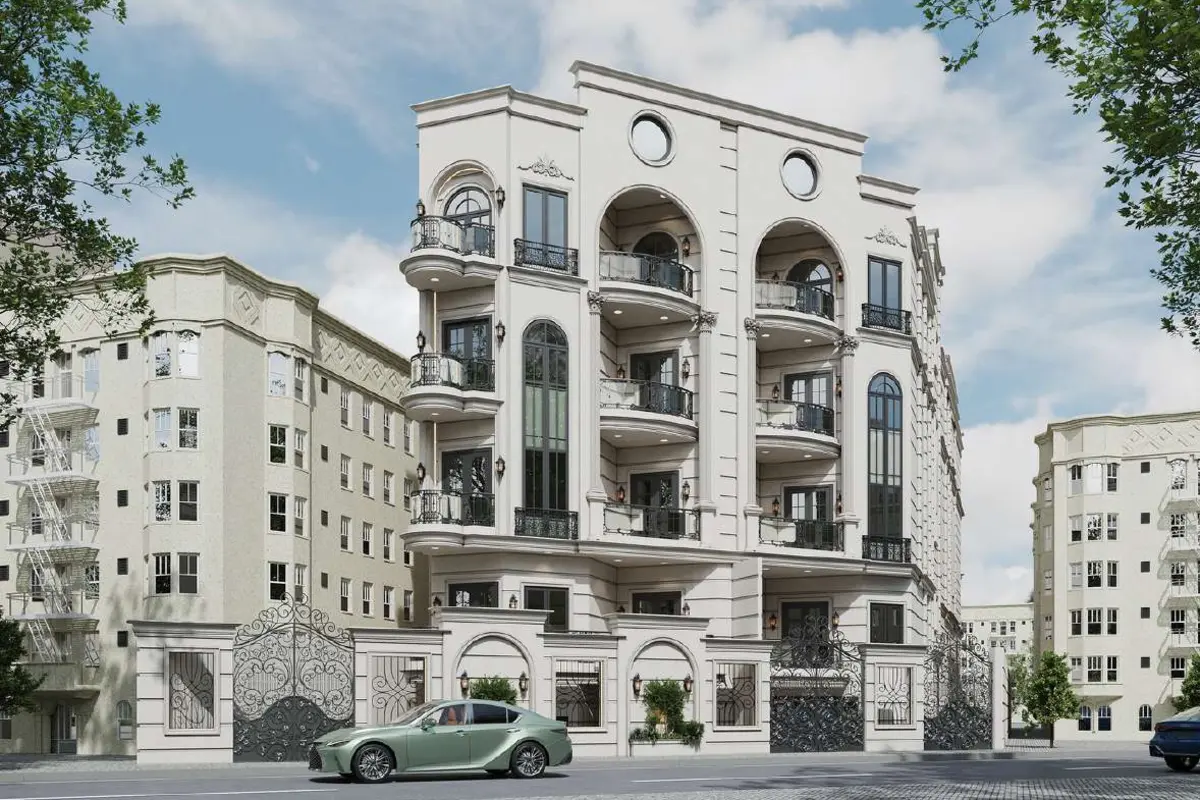
Examples of this type include The ONE by Mahawer project Which combines residential, commercial and administrative components.
He also represents Tuvalu Mall A multi-use non-residential model that combines commercial, administrative and medical components.
Hospitality Development
This type includes hotels, resorts, hotel apartments, hospitality products and projects that depend mainly on the stay and experience of visitors within the site.
The evaluation of a tourism project is different from just owning a coastal site; it must be proven that there is an application that can adequately support occupancy and operation.
Main sources of revenue
- Accommodation and rooms.
- Food and drinks.
- Events and meetings.
- Recreational services.
- Additional services related to Operation.
The main risks
- Seasonality.
- Occupancy fluctuated.
- High cost of management, labor and maintenance.
- The movement of travel and tourism is changing.
- Rely on an operator or hotel brand.
Therefore, it should not be assumed that the coastal location automatically makes the best use of Tourism Development.
Industrial and Logistics Development
Includes Industrial and Logistics Development Factories, warehouses, warehouses, distribution centers, industrial complexes, light industry spaces.
This type is associated with roads, ports, supply chains, infrastructure, energy, loading and unloading to a greater degree than with the daily movement of customers.
Success factors
- Proximity to roads, hubs, ports and markets.
- Easy movement of trucks.
- Loading and unloading areas.
- Electricity, water, drainage and gas capacities by activity.
- Safety and environmental requirements.
- Heights and spaces suitable for Operation.
- The presence of a clearly targeted user or industrial sector.
Key Risks
These include the high cost of infrastructure, the design of a highly specialized asset that is difficult to reuse, changing supply chains, and the dependence of the project on a limited number of tenants or users.
Land development and redevelopment of existing real estate
Land development
It involves the preparation of large or undeveloped land for use through planning, roads, utilities, zoning, and then its full development, sale or development of parts of it.
Redevelopment
It means a fundamental change of the existing asset or site, such as the demolition of an unsuitable building and the creation of a new project or the reorganization of the site for a more market-and requirement-compliant use.
Rehabilitation
They are based on improving an existing asset while retaining an important part of its structure, such as updating services, interfaces, divisions or systems.
Change of use
In some cases, an asset can be transferred from one job to another when the conditions, technical condition and infrastructure allow it.
When is this genre worth studying
- When the current use of the asset is weak compared to the potential of the site.
- If the existing structure is suitable for reuse.
- When rehabilitation is more efficient than new construction.
- If the demand in the region has changed and there is a more convenient use.
Comparison of types of real estate development
| Development Type | Primary user | Revenue model | Operating requirements | The most prominent risk factor |
|---|---|---|---|---|
| Residential | Individuals and families | Sale or rent | Medium | Purchasing power and delivery |
| Retail | Stores and customers | Sale, lease or operation | High | Movement and occupancy |
| Office | Companies and professions | Sale or rent | Medium to high | Demand for offices |
| Medical and Service Development. | Service providers and customers | Sale, lease or operation | High | Licensing and processing |
| Mixed-Use Development | More than a slide | Multiple sources | High | Balance of uses |
| Tourist and hotel | Visitors and guests | Operation, accommodation and services | High | Occupancy and seasonality |
| Industrial and logistic | Companies and supply chains | Sale, lease or operation | Specialist | Infrastructure |
| Redevelopment | According to the new usage | Sale, lease or operation | By Project | The state of origin and hidden costs |
This comparison does not represent a ranking of profitability or risk; it cannot be said that commercial development is better than residential or that residential is generally safer. The result depends on the data of each project, its location, financing, cost and operation.
How to choose the type of real estate development according to the project goal
| Objective | The type closest to the study | The most important factor |
|---|---|---|
| Providing units for families | Residential | Spaces, prices and services |
| Creating a residential community with services | A compound or residential community | Density, management and maintenance |
| Customer service and daily activities | Retail | Movement and purchasing power |
| Providing corporate headquarters | Office | Access, attitudes and work environment |
| Providing clinics and health services | Medical and Service Development. | Licensing, access and processing |
| Serve more than one slice | Mixed-Use Development | Balance of components and movement |
| Large land exploitation | Land development or a phased project | Facilities, demand and stages of implementation |
| Improving an existing asset | Redevelopment or rehabilitation | Technical condition and cost |
| Storage, distribution or manufacturing | Industrial and logistic | Roads, energy and operating requirements |
| Providing accommodation and hospitality services | Tourist and hotel | Occupancy, management and seasonality |
This comparison should be considered only as a starting point, not a final decision; a market study may reveal that the site needs a small percentage of commercial next to housing instead of an independent commercial project, or that residential buildings are more realistic than a large compound.
How to choose the right type of real estate development?
1. Review Land Use and requirements
Start with the uses, Heights, intensities, positions, entrances and obligations that the site legally and technically allows.
2. Select the end user
Who will use the project Family, Merchant, Company, doctor, patient, tourist or logistics company
3. Study demand and competition
Specify the volume of the order, competing projects, prices, available spaces and services, and what is expected to enter the market before the delivery date.
This step can be expanded via a guide
Real Estate Market Study Guide..
4. Compare more than one use
Do not assume that the first idea for the site is the best. Compare a residential, commercial, administrative or mixed scenario as the land allows.
5. Calculate the cost and cash flow
Compare the cost of land, design, licensing, implementation, financing and operation with the expected revenues and the timing of obtaining them.
6. Operation difficulty values
A commercial, medical, hotel or mixed-use project may need continuous management, which is different from a residential project intended for sale.
7. Test the conservative scenario
Test what will happen if the cost rises, sales fall, implementation is delayed, or occupancy is lower than expected.
What is the difference between the type of development and the real estate development strategy
The type of development determines What is being developedWhile the strategy determines How will it be developed and monetized from it.
For example, a project may be residential, but it can be developed with the aim of selling units, keeping part of them for rent, or implementing it in stages.
Likewise, a commercial project can be intended for sale, lease, operation or combination of more than one model.
To expand on this aspect, see the guide Real estate development strategies.
What types of real estate development exist in New Damietta
New Damietta includes residential, commercial, service, industrial, tourist and other uses, which makes the market able to accommodate more than one type of projects, but to different degrees depending on the region and location.
The city should not be considered a homogeneous market; a location close to a residential density or a university is different from a commercial central location, and sites connected by roads and industrial areas are different from areas intended for housing.
Types of development that can be studied within the city include
- Residential projects serving families and permanent housing.
- Trade and services in areas with high density and traffic.
- Administrative projects in the appropriate locations for companies and professions.
- Clinics, medical and service projects in locations where there is an appropriate demand.
- Mixed-use projects when the land allows and the market justifies the various components.
- Industrial and logistics projects in the designated areas.
- Tourism or hospitality projects when it is proved that there is an appropriate operational demand.
The area, Street, plot, land use, audience and competition must be evaluated before the final type is selected.
Examples of types of real estate development from Mahawer projects
The following examples illustrate the different development models within Mahawer new Damietta projects, and do not represent an independent comparison between all market projects.
| Project | Type of development | What It Demonstrates |
|---|---|---|
| Sea Dar Compound | residential development | A model of a residential community based on the organization of units, services, movement and common spaces. |
| SIAG Residence | residential development | It shows the difference of the residential product depending on the location, segment and target audience. |
| The ONE by Mahawer project | Multi-use: residential, commercial and administrative | It demonstrates the integration of housing, trade and management within one project with the need to organize entrances, movement and services. |
| Tuvalu Mall | Multi-use non-residential: commercial, administrative, medical | It demonstrates the integration of various service, commercial and professional uses within a single project. |
Disclosure:
The previous projects belong to axes real estate development and are used as application examples only, and mentioning them does not mean that a specific type of development achieves a guaranteed return or performance.
What are the risks of choosing an inappropriate type of real estate development
- Choosing a business on a site that does not have enough traffic or demand.
- The implementation of residential units with spaces or prices that are not suitable for the public.
- Creation of offices in a market of limited administrative demand.
- Development of medical units without taking into account the requirements of activity and licensing.
- Combining conflicting uses within a project.
- Relying on seasonal demand in a project that needs constant operation.
- Creation of a highly specialized industrial asset without a clear user.
- Neglect of maintenance and operating costs after delivery.
- Relying on general estimates of return that are not specific to the site and the project.
- Choose the type of project before studying the use of land and the market.
A checklist before choosing the type of real estate development
- The ownership of the land or asset has been revised.
- The uses and requirements have been revised.
- The target audience has been identified.
- The request and competition were analyzed.
- The projects expected to enter the market have been reviewed.
- More than one potential use has been tested.
- The cost of each scenario was compared.
- The revenue model is determined: sale, rent or operation.
- Sources of financing and cash flows were analyzed.
- Management and operational needs were assessed.
- The high cost scenario was tested.
- A scenario of low sales or occupancy has been tested.
- The chosen type was tied to a clear development strategy.
- Data, assumptions and the history of the study are documented.
Methodology of preparing the directory of types of real estate development
This guide has been prepared to classify Types of Real Estate Development Depending on the use of the property, with a distinction between it and the method of development of the asset or the project strategy.
In order to avoid duplication of content, the explanation of the concept and stages of development have been shortened and linked to the main guide on Real estate development, The decisions on sale, lease, retention and partnership have also been allocated to a page Real estate development strategies.
Commercial Disclosure:
The content is published on the official website of mawhawar real estate development and uses some of the company's projects as illustrative examples.
Content limits:
This guide does not represent a feasibility study, land assessment, investment recommendation, legal, engineering or financial consultation. The suitability of each type of project varies from one to another depending on the location, market, requirements, cost, financing and operation.
Sources and references for expansion
Conclusion:what type of real estate development is most suitable for the project
There is no type of real estate development that can be considered the best for all lands and markets. Residential may be suitable for a location that serves families, while commercial needs traffic and purchasing power, administrative requires demand from companies and professions, and medical needs different requirements, equipment and operation.
Mixed-use development needs to prove that there is a demand for each component and regulate the relationship between them, while industrial and logistics projects are more related to infrastructure, roads and operation than to consumer movement.
Therefore, the right decision starts from the location, permitted uses, audience, market study, then compare more than one scenario in terms of cost, financing, operation and risks before choosing the type of project and its development strategy.
Frequently asked questions about the types of real estate development
What are the most important types of real estate development?
The main types include residential, commercial, administrative, medical, service, mixed-use, tourist, hotel, industrial and logistic development, as well as land development and redevelopment of existing assets.
What is the difference between residential and commercial development
Residential development serves individuals and families and depends on spaces, prices, services and housing, while commercial serves activities and customers and depends more on movement, interface, purchasing power, occupancy and operation.
What is the difference between commercial and Office Development?
Commercial serves activities that deal directly with the public, while administrative serves companies, offices and professions, therefore the requirements for movement, entrances, parking and operation differ between them.
What is a mixed-use development
It is the integration of two or more uses within one project, such as housing, trade and administration, or commercial, administrative and medical, with the organization of entrances, movement, parking and services according to each use.
Is commercial development more profitable than residential
Not necessarily. The results vary depending on the location, demand, cost, financing, occupancy and operation, therefore a particular type cannot be considered consistently more profitable.
How to choose the right type of development for the land
Start by reviewing the permitted use, conditions, location and facilities, then study the demand, audience, competition and compare more than one scenario in terms of cost, financing, operation and risks.
What is the difference between the type of development and the real estate development strategy
The type of development determines the use such as residential, commercial or administrative, while the development strategy determines how to implement the project and generate revenue from it, such as sale, leasing, phased implementation or partnership.
Is residential development less risky
Residential development is influenced by purchasing power, cost, delivery, competitive supply and required space, so the risks for each project must be assessed independently.
Is Tuvalu mall a mixed-use residential project
No.no. Tuvalu mall is a non-residential mixed-use project that includes commercial, administrative and medical units.
What is the example of a residential mixed-use development in Mahawer
The ONE by Mahawer project combines residential, commercial and administrative components within one project in New Damietta.
Is it possible to determine a fixed return for each type of development
No.no. The results vary by location, cost, financing, prices, sales, occupancy, operation and timing, therefore each project must be evaluated through its own market and feasibility study.