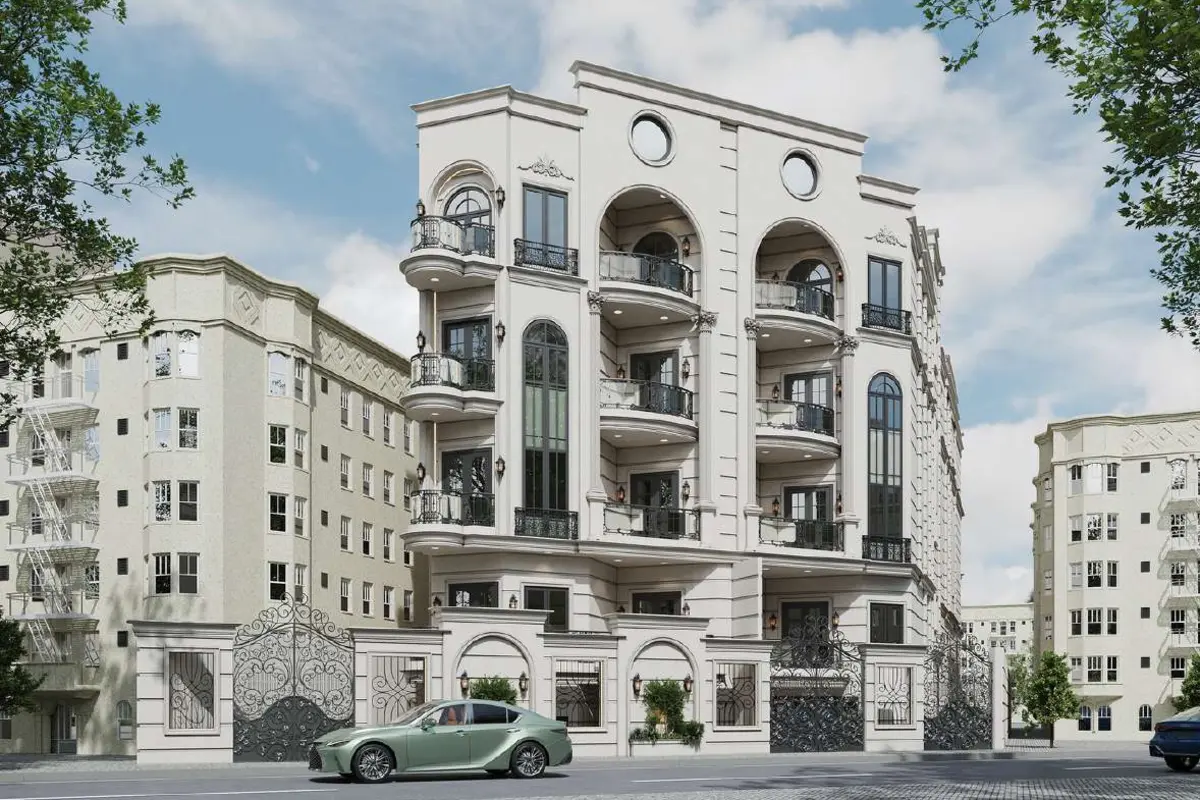
And it does not equal Real estate development Construction alone is not enough; the developer's role extends far beyond simply building. They coordinate between the market, the land, design, financing, permits, contractors, marketing, and operation. Therefore, a plot of land may be ideal, but a project can fail if its designated use doesn't meet demand, if costs become too high, or if the available space and prices don't align with the target audience.
Short answer: What is real estate development?
Real estate development It is the process of creating new value from land or a building by studying the best use of the site, identifying the right product for the market, preparing feasibility studies, securing financing, design and permits, and then executing and selling, leasing, or operating the project. The project may be residential, commercial, administrative, medical, mixed-use, tourism-related, or industrial, and may involve developing new land or redeveloping an existing asset.
The role of the real estate developer: Managing this process and connecting the various parties together, while bearing or managing the risks of land, market, cost, financing, implementation, delivery and operation.
The most important rule: The success of development does not begin with the question "What are we building?" only, but with three questions: Who will use the project? Why do they need it? And can the location, budget, and requirements support the proposed product?
What is real estate development in detail?
Real estate development can be understood as a process that combines planning, investment, management, and execution with the goal of transforming an entirely untapped opportunity into a usable real estate asset. This opportunity may begin with vacant land, a serviced plot within a new city, an older building requiring renovation, or an existing asset whose use can be changed if regulations permit.
Professional reviewers view real estate development as a multidisciplinary and frequently revised process, relying on the collaboration of diverse expertise in areas such as planning, design, engineering, finance, law, marketing, construction, and operation. Therefore, not all decisions are linear; a developer may need to modify the design after market research, change the product after cost review, or restructure the project if funding or demand changes.
Value is not achieved simply by adding a building to the land. Value arises when the product becomes more suitable for the site and the market than before, and can be implemented, financed, sold, leased, or operated sustainably.
| State before development | Potential developmental intervention | Possible outcome |
|---|---|---|
| Undeveloped land | Market research, design, licensing and construction. | Residential, commercial, or other permitted use. |
| large land | Division, facilities, and implementation in stages. | A multi-stage community or project. |
| old building | Renovation, rehabilitation, or re-division. | Increased efficiency without complete demolition. |
| Existing site underutilized | Redevelopment or change of use in accordance with approvals. | A product more suited to current demand. |
Why does real estate development exist and what value does it add?
Real estate development arises when there is a gap between the current use of land or an asset and the needs of the market or community. An area might require housing units, daily services, clinics, offices, logistics spaces, or a mixed-use project. The role of development is to identify this need and transform it into a viable product, not simply to build on the largest possible area.
The value that development can add
- Better use of land: Choosing a product that suits the location, requirements, and demand.
- Add units and services: Housing, business, medicine, offices, hospitality, or logistics, depending on market needs.
- Improving an existing asset: Rehabilitating a building or improving its operational efficiency.
- Linking the uses: Integrating housing, work, and services into a mixed-use project when the market justifies it.
- Organization of implementation: Transforming the idea into phases, funding, contracts, and a clear timeline.
However, development does not automatically guarantee economic benefit or return on investment, because the outcome depends on the quality of market and product research, cost, implementation, management, and timing.
What does a real estate developer do?
A real estate developer is the party that leads the process of transforming an idea or piece of land into a project. They may own the land, develop it for another owner, enter into a partnership, or execute the project through a company that owns or manages a portfolio of projects. In all cases, their role is broader than just construction; they are responsible for coordinating decisions across multiple disciplines.
Key tasks of a real estate developer
- Search for the opportunity or land and understand its characteristics.
- Review of ownership, allocation, uses and conditions.
- procedure or assignment Real estate market study.
- Choosing the type of project, product, and target segment.
- Preparing feasibility studies, budgets, and cash flow statements.
- Defining the financing strategy and partnerships, if any.
- Contracting with designers, consultants, contractors and suppliers.
- Management of licenses, design, implementation, quality, time and cost.
- Defining the marketing, sales, or leasing strategy.
- Delivery management, after-sales services and operation according to the type of project.
In small projects, the developer may be directly involved in most of these decisions, while in large projects, tasks are distributed among financial, engineering, legal, marketing, and operational teams, with the responsibility for coordination and investment decision remaining at the center of the development process.
What is the difference between a real estate developer, a contractor, and a real estate investor?
Confusion about these roles is common, but each party has a different function. A single company may perform more than one role, but that doesn't make the roles identical.
| The party | Primary floor | Key decisions | Main source of risk |
|---|---|---|---|
| Real estate developer | Managing the project development cycle from opportunity to delivery or operation. | Land, product, market, feasibility, financing, design, implementation and sale. | Multiple risks include market, cost, financing and implementation. |
| Contractor | Execute construction work in accordance with the contract, plans and specifications. | Implementation, resources, labor, program, quality and safety. | Costing, implementation, contracting, and collection. |
| The real estate investor | Owning property or a share for the purpose of income or value growth, or both. | Choosing the asset, price, financing, return, and exit. | Price, occupancy, liquidity, yield, and market change. |
A contractor can build a project without having chosen the project idea, financed it, or sold its units, while an investor can buy a ready-made unit without participating in the development process. A developer, however, deals with a broader range of decisions and risks.
What is the difference between real estate development and real estate investment?
Real estate development It focuses on creating a new asset or modifying an existing one and managing it until it becomes a product that can be sold, leased, or operated. Real estate investment It focuses on allocating capital to a property or real estate instrument with the goal of generating income or growth in value.
The two activities may overlap; a developer may retain a portion of the project and become an investor, just as an investor may finance a development project. However, purchasing an apartment for rent, for example, is not in itself a real estate development transaction unless it involves creating or substantially altering the asset.
To explore investment opportunities through developers, refer to the guide. Investing in real estate development companies.
What are the stages of real estate development from idea to operation?
There is no single list that applies literally to every project, as phases may overlap or revert to a previous step. However, the development process can be streamlined in subsequent phases, considering it a practical framework rather than a fixed legal schedule.
1. Discovering the opportunity
The process begins with a market need or problem. The opportunity might be a site seeking a suitable use or a use requiring a specific location, and at this stage, preliminary tests are conducted before consuming significant time and expense.
2. Initial inspection of the land or asset
Ownership, allocation, uses, facilities, access, technical condition, and restrictions that may change the possible product or cost are reviewed.
3. Market research
The target user or buyer is identified, and demand, supply, competition, prices, spaces and absorption rate are studied, instead of relying on the impression that the area is only "promising".
4. Choosing the best feasible use case
Scenarios such as residential, commercial, administrative and mixed are compared according to location, requirements, demand and cost, and not according to the highest advertised price per meter.
5. Feasibility study and financial model
The cost of land, design, licensing, construction, marketing, financing and operation is estimated, then compared to potential revenues, cash flow schedules and adverse scenarios.
6. Design and Licensing
The proposed product is transformed into actionable and approved plans, with spaces, parking, traffic, services and specifications adjusted to suit the market.
7. Financing, Contracting, and Implementation
Capital, funding sources and contracts are determined, then implementation work begins with managing time, cost, quality, changes and risks.
8. Marketing, sale or leasing
The product is offered to the target segment with clear contracts and conditions, with follow-up on sales or leasing, and marketing is not separated from the project's ability to deliver and operate.
9. Handover and Operation or Exit
Depending on the strategy, the project may be handed over to buyers, started operating and leasing, the developer may retain part of it, or the asset may be sold after it has stabilized.
Because this page explains the general concept, the decisions for each stage can be expanded upon within the guide. Real estate development strategies.
Why is market research the starting point in real estate development?
Market research is the tool that connects land with the end user. Without it, a developer might build a product that is technically sound but unsuitable for demand, price, or the spaces the public can afford.
Questions that the study should answer
- Who is the target audience: family, investor, company, doctor, trader or operator?
- What is the current demand size, and what segment can the project realistically attract?
- What are the competing projects that are currently underway or being implemented?
- What are the acceptable sizes, prices, and payment plans?
- What are the gaps in the existing services or products?
- How many units can the market absorb within a specific period?
- How can an order change before the delivery date?
The study must also be linked to the precise location, as a single city may contain neighborhoods, streets, and areas that differ in demand, traffic, accessibility, and services. A guide can be consulted. Choosing the location of the property To understand the impact of location on usage type and demand.
What is the role of feasibility studies and financial models in real estate development?
After identifying the potential product, the idea must be translated into numbers. A feasibility study doesn't just ask, "How much will we sell?", but also tests whether the project's value and expected revenue can cover the costs of land, construction, financing, operation, risks, and time.
| Factor | Examples of what it includes |
|---|---|
| land cost | Purchase, partnership, or commitments related to allocation. |
| Direct costs | Construction, finishing, infrastructure and equipment. |
| Indirect costs | Design, consulting, licensing, management, and marketing. |
| Funding | The cost of capital or loans and liabilities associated with cash flows. |
| Revenue | Sales, rentals, or operation, depending on the project model. |
| Time | Dates for spending, sales, collection, delivery, and operation. |
| Scenarios | Increased costs, slower sales, delayed implementation, or low occupancy. |
There is no fixed rate of return or profit margin that can be considered suitable for every project, because risks, duration, financing, and type of use vary. Therefore, figures must be specific to the project itself and the date the study was prepared.
What are the most important types of real estate development?
Development can be classified according to the use of the property, and each type has different audiences, operations, and risks.
- Residential development: Apartments, villas, residential communities and small projects.
- Business development: Shops, retail centers, malls and direct services to the public.
- Office Development: Offices, corporate headquarters, business centers.
- Medical and Institutional Development: Clinics, medical centers, and some service and institutional uses.
- Mixed-Use Development: Combining two or more uses within a single location with organized movement and operation.
- Hospitality Development: Hotels, resorts and hospitality products.
- Industrial and Logistics Development: Factories, warehouses, distribution centers.
- Land development and redevelopment: Preparing land or repurposing an existing asset.
This page does not go into detail about each type to avoid duplication of content; you can refer to the guide. Types of real estate development To compare demand, operation, risks, and the method of choosing the appropriate use.
What is meant by real estate development strategies
The type determines What has evolved?While the strategy determines How to develop and create value from the projectIt may be two residential projects, but one is built for sale in its entirety, and the other for retention and rental, or one is implemented in one phase while the other is divided into phases related to demand and financing.
Examples of development strategies
- Development from the land and sale after or during implementation.
- Retention and leasing after project completion.
- Phased implementation of large projects.
- Partnership between the landowner and the developer.
- Redevelopment or rehabilitation.
- Developing a multi-use project to diversify demand sources.
The guide explains Real estate development strategies How to choose the path based on land, financing, investment and operating duration, and exit plan.
How does residential development differ from commercial and mixed development?
| Factor | Residential | Commercial | Mixed |
|---|---|---|---|
| Main user | Individuals and families. | Activities and clients. | Multiple customer segments. |
| The decisive factor | Accommodation, services, price and delivery. | Movement, interface, mix, and operation. | Balance of uses and separation of movement. |
| Potential revenue | Sale or rent. | Sell, rent or operate. | More than one source according to the ingredients. |
| Operational complexity | Average, usually. | Higher due to occupancy and operation. | Higher due to its versatility. |
| common risk | Weak purchasing power or delays. | Reduced mobility or occupation. | Conflicting uses or misallocation. |
A higher price per square meter in commercial land does not necessarily mean it is better than residential land, just as diversified uses do not necessarily mean a mixed-use project is less risky. Evaluating each model should begin with market factors, location, cost, and operational considerations.
For more information on buying and leasing commercial properties, see the guide. Investing in commercial real estate.
How is a real estate development project financed?
The project can be financed by the developer's capital, bank financing, partners, a partnership with the landowner, or a combination of multiple sources. Sales and bookings may also contribute to the project's cash flow, subject to its specific legal and contractual framework.
Financing is not measured solely by its ability to initiate implementation, but also by its capacity to complete the project under less optimistic scenarios. Therefore, financing should be linked to the implementation schedule, collection dates, contractor commitments, and delivery, and a contingency fund should be established for costs and delays, rather than assuming all variables proceed according to the original plan.
Important funding questions
- How much capital is required before sales or collections can begin?
- What impact does a delay in sales or installments have on implementation?
- Are there large commitments in one phase or are they spread out?
- What is the cost of financing and its impact on price and feasibility?
- What is the alternative scenario if construction costs increase?
What are the success factors for a real estate development project?
Success is not linked to a single factor. A project in a strong location may falter due to an unsuitable price, a well-designed project may suffer due to poor operation, and a project achieving rapid sales may face cash pressure if collections do not balance expenses.
| Factor | practical question |
|---|---|
| Location | Does it actually serve the intended user and audience? |
| Application | Is there a demand capable of paying, and not just general interest? |
| Product | Are the spaces, specifications, and price suitable for this segment? |
| Requirements | Is the proposed product licensable and feasible? |
| Cost | Can the project withstand reasonable increases in costs? |
| Funding | Are the cash flows capable of supporting the executive schedule? |
| team | Is there suitable experience in design, implementation, marketing, and operation? |
| Time | What is the expected supply at the time of delivery, not just at the time of purchase? |
| Operational Requirements | Is there a management, maintenance, and occupancy plan after handover? |
What are the most important risks of real estate development
Real estate development is a high-risk activity because decisions can be made over years and may be affected by market factors, financing, execution, and regulations. Risk does not mean the project is unsuitable, but rather that it is essential to assess the potential downside before committing.
- Earth hazards: Issues of ownership, allocation, utilities, or soil.
- Market risks: Weak demand, entry of a competing supply, or a change in purchasing power.
- Design risks: A product that is unsuitable for use, difficult to operate, or difficult to sell.
- Licensing risks: Delay in approvals or design not conforming to requirements.
- Cost risks: Increased building material costs, changes, or unexpected work.
- Financing risks: Lack of liquidity, high costs, or a mismatch between revenue and expenditure.
- Implementation risks: Delays, quality, contractors, and supply chains.
- Marketing risks: Pricing or payment plan that is not in line with the market.
- Operational risks: Poor management, occupancy, or maintenance after opening.
For individual buyers, the risk profile differs, encompassing price, contract, developer, delivery, lease, and liquidity. A guide can be consulted. Real estate investment risks Before purchasing a unit.
How does real estate development work in Egypt and the new cities?
Real estate development in Egypt is influenced by the nature of the land, the governing authority, land use, regulations, permits, and infrastructure, in addition to market conditions and financing. In new cities, the New Urban Communities Authority plays a role in planning and developing a number of urban communities. The Authority was established by Law No. 59 of 1979 with the aim of creating new urban centers, redistributing the population, and supporting urban expansion beyond traditional settlements.
The Egyptian market cannot be treated as a single entity when preparing a project. Cairo differs from the Delta, coastal cities differ from cities with consistent demand, and even neighborhoods within the same city vary. Therefore, general market reports should be used to understand the trend, and then the analysis should be broken down to the city, district, plot, and unit type before making a development decision.
What should be examined in the Egyptian market?
- Authority, allocation, and permitted use.
- Current facilities and completion timeline.
- Population growth, jobs, and surrounding services.
- Existing projects and projects under construction.
- Purchasing power and prevailing payment plans.
- Implementation costs and the risk of changes.
- Delivery time compared to entering competing projects.
What distinguishes real estate development in New Damietta?
New Damietta is one of the first-generation cities under the New Urban Communities Authority, encompassing residential, service, commercial, industrial, tourism, and recreational uses. This diversity creates multiple development paths, but it doesn't mean that every type of project is suitable for every location within the city.
A residential project needs to understand families, services, universities, roads, and purchasing power, while a commercial project requires studying customer traffic, the scope of attraction, and the mix of activities, and an administrative and medical project needs to assess accessibility, parking, elevators, and the nature of professional and service demand.
Therefore, studying the location within New Damietta becomes more important than relying solely on the city's name. The central area, the coastal district, and areas near universities, roads, or high population densities do not serve the same purpose; each plot must be evaluated according to its permitted use and the actual demand in its vicinity.
Examples of real estate development from the Axes projects
The following examples are used to illustrate the difference in development and product models, and are not an independent comparison of all market projects or a promise of a particular investment performance.
| Project | Type of development | What does he explain? |
|---|---|---|
| Sea Dar Compound | Residential development. | Transforming a large area into a residential community with services, organization, and internal traffic flow. |
| SIAG Residence | Residential development across multiple sites and plots. | The residential product varies depending on the location, plot, and target market. |
| The ONE by Mahawer project | Versatile development. | Integrating residential, commercial, and administrative units within a single project, with the need to regulate entrances, traffic flow, and uses. |
| Tuvalu Mall | Non-residential mixed-use development. | Integrating commercial, medical, and administrative aspects within a project requires traffic management, occupancy, and operation. |
Disclosure: The projects mentioned are affiliated with real estate development hubs, and therefore are used as examples of the company’s experience and published projects, and do not represent evidence that a particular type of development is the best or highest return for each person.
How do you evaluate a real estate developer before buying a unit?
For the buyer, understanding real estate development helps them evaluate the company and the project more deeply than just the advertisement and price. A developer is not judged solely on the number of projects completed, but also on their ability to secure the land and project, manage execution, clarify contracts, and deliver a usable and operational product.
List of practical questions
- Who is the developer and what is their role in the project and the land?
- What past or current projects can be verified?
- What is the actual implementation status compared to the announced schedule?
- What are the specifications for the unit, delivery, and maintenance?
- Are the uses, licenses, and plans clear?
- What are the conditions for delay, assignment, cancellation, and resale?
- Who will manage the project or services after delivery?
- Are the offers, prices, and discounts documented and dated?
Reputation alone is not enough; even with a well-known company, the project, unit, and specific contract that you will purchase must be reviewed.
A quick checklist to understand any real estate development project
- The market need that the project is trying to serve has been identified.
- The target audience was clearly defined.
- The land or asset, ownership and allocation were reviewed.
- The uses, requirements and facilities have been revised.
- The competition and expected supply at the time of delivery were analyzed.
- Multiple usage scenarios or product types were tested as needed.
- The total cost was estimated, not just the construction cost.
- The sources of funding and the timing of cash flows have been identified.
- A realistic schedule was set for design, licensing and implementation.
- The strategy for selling, leasing, or operating has been determined.
- Management, maintenance and operation were assessed after delivery.
- A conservative scenario of high costs or slow sales was tested.
- Assumptions and data are documented and dated.
Methodology of article preparation and disclosure
This guide is designed as a primary introduction to the concept of real estate development, summarizing its phases, types, strategies, and risks without replicating the details found in specialized guides on the Mahawer website. The framework is based on the principles of multidisciplinary development as presented in the Urban Land Institute's literature, and on official sources from the New Urban Communities Authority when referring to new cities and New Damietta.
Commercial disclosure: This article, published on Mahawer Real Estate Development's website, uses some of the company's projects as case studies. Therefore, it does not represent an independent comparison of all developers or projects in the market.
Content limits: This content is for general informational purposes only and does not constitute a feasibility study, official land or property appraisal, or legal, engineering, or financial advice. Requirements, permits, costs, financing, returns, and risks vary depending on the project, the relevant authority, and the study's timeline.
Sources and references of the article
- Urban Land Institute: Introduction to the Real Estate Development Process
- Urban Land Institute: Foundations of the Development Process
- Urban Land Institute: Development for Nondevelopers
- New Urban Communities Authority: An introduction to the authority and the objectives of establishing new cities
- New Urban Communities Authority: New Damietta
- Real estate market study
- Types of real estate development
- Real estate development strategies
- Real estate investment risks
Summary: How to understand real estate development correctly?
Real estate development is not synonymous with construction; it is a comprehensive decision-making process that begins with understanding the market and the land and ends with a usable product that can be sold, rented, or operated. A successful developer does not simply seek the largest built-up area or the highest price per square meter; rather, they seek a use that the location, market, financing, and execution can realistically support.
When evaluating any project, begin by asking about market needs, location, and requirements, then the product, cost, financing, and timeline, followed by marketing, operations, and an exit strategy. The more verifiable the assumptions and the more they can withstand conservative projections, the more balanced the development or acquisition decision will be compared to one based solely on promises or expectations of price increases.
Frequently Asked Questions about Real Estate Development
What is real estate development?
It is the process of converting land or a building into a real estate asset that can be used, sold, rented, or operated through market research, feasibility studies, design, financing, licensing, implementation, marketing, and operation, according to the nature of the project.
What is the role of the real estate developer?
The developer leads the development process and coordinates between land, market, finance, design, licenses, contractors, marketing, and delivery or operation, and deals with the risks associated with each stage.
What is the difference between a real estate developer and a contractor?
The developer leads the project from idea, feasibility and financing to sale or operation, while the contractor focuses mainly on carrying out construction work according to a contract, plans and specifications.
What is the difference between real estate development and real estate investment?
Development creates a new asset or modifies an existing one, while investment focuses on allocating money to a property with the goal of generating income or increasing its value. A single entity may perform both roles.
What are the stages of real estate development?
It begins with discovering the opportunity, examining the land, conducting market research, selecting the use, conducting a feasibility study, then design, licensing, financing, implementation, and marketing, and ends with delivery, operation, or exit according to the project strategy.
What are the most important types of real estate development?
This includes residential, commercial, administrative, medical, service, mixed, tourism, hotel, industrial and logistics, in addition to land development, redevelopment and rehabilitation.
How does a developer choose the best use for the land?
By comparing the permitted uses with the location, demand, competition, cost, financing and operation, then testing more than one scenario and not choosing the use based on the price per meter alone.
Does real estate development only mean construction?
No. Construction is a phase within a broader process that includes market research, land and feasibility studies, financing, design, permits, marketing, risk management, and delivery or operation.
Does every real estate development project generate a profit?
No. Results are affected by demand, price, cost, financing, execution, timing, operation and liquidity, and there is no guaranteed return or price increase for every project.
How do I evaluate a real estate developer before buying a unit?
Review its position in the project, available land and project documents, track record, implementation status, contract, handover, maintenance, assignment policy, and management or operation plan.
What is the importance of market research in real estate development?
Market research identifies the audience, demand, supply, competition, prices, spaces, and absorption rate, and helps to select a product that the market can use or buy instead of building based on general assumptions.
What is the relationship between real estate development and new cities in Egypt?
Projects in new cities need to link the product to land use plans, facilities, roads, population growth, services and requirements, while studying each city, area and plot independently.