إجابة مختصرة: أيهما أفضل للاستثمار العقار السكني أم التجاري؟
العقار السكني يناسب غالبًا من يبحث عن قاعدة طلب أوسع وإدارة أبسط ومرونة في الاستخدام أو إعادة البيع، بينما قد يناسب العقار التجاري من يستهدف دخلًا إيجاريًا محتملًا أعلى ويستطيع تحمل مخاطر تشغيلية وشغور وتجهيز أكبر. الاختيار الأفضل هو النوع الذي يحقق صافي عائد مناسب بعد جميع التكاليف، ويتوافق مع ميزانيتك ومدة الاستثمار وقدرتك على إدارة الوحدة والخروج منها.
ما الفرق بين العقار السكني والعقار التجاري؟
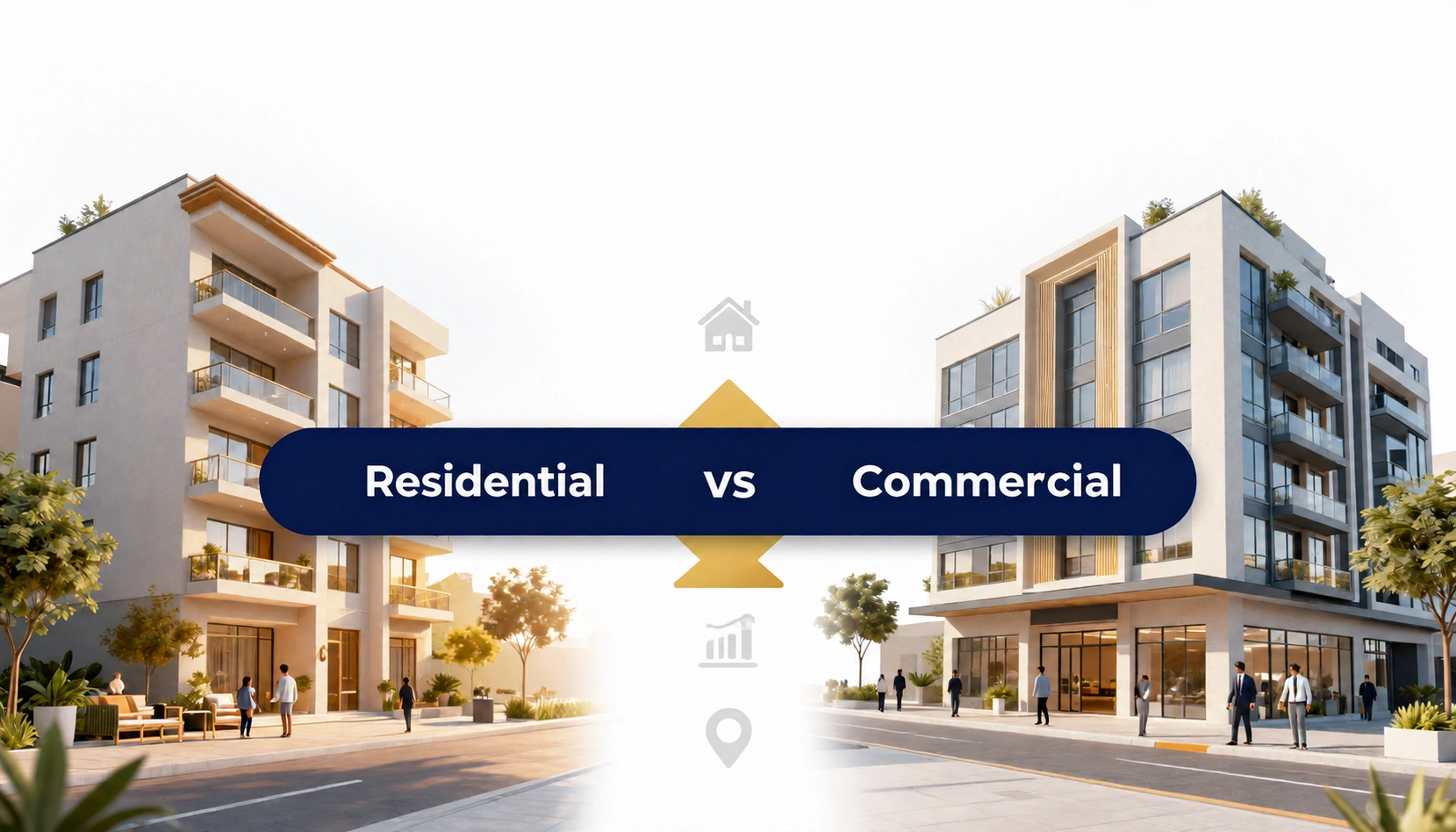
يبدأ الفرق من الغرض الأساسي للوحدة. فالعقار السكني مخصص لإقامة الأفراد والعائلات، مثل الشقق والفلل والوحدات الساحلية. أما العقار التجاري فيُستخدم لتشغيل نشاط أو تقديم خدمة، مثل المحلات والمكاتب والعيادات والمراكز الخدمية والوحدات الإدارية والطبية.
العقار السكني
يعتمد الطلب على العقار السكني بصورة أساسية على الحاجة إلى السكن، والقرب من المدارس والخدمات والطرق والمرافق، وجودة المنطقة والتشطيب، ومدى ملاءمة المساحة والسعر للأسر أو الأفراد المستهدفين.
العقار التجاري
يعتمد الطلب على العقار التجاري على حركة النشاط الاقتصادي، وحجم الجمهور أو الشركات أو المرضى، ووضوح الواجهة، وسهولة الوصول، والمداخل والمواقف، ونوع النشاط المسموح، وقوة تشغيل المشروع والمنطقة المحيطة.
ولمعرفة تفاصيل المحلات والمكاتب والعيادات بصورة أوسع، يمكن مراجعة دليل الاستثمار في العقارات التجارية.
مقارنة شاملة بين العقار السكني والتجاري
| عنصر المقارنة | العقار السكني | العقار التجاري |
|---|---|---|
| طبيعة الاستخدام | الإقامة والمعيشة للأفراد والعائلات. | تشغيل نشاط تجاري أو إداري أو طبي. |
| مصدر الطلب | الحاجة المستمرة إلى السكن والخدمات اليومية. | حركة العملاء والشركات واحتياج السوق إلى النشاط. |
| شريحة المستأجرين | أفراد وعائلات، وهي شريحة أوسع نسبيًا. | شركات وأطباء وأصحاب أنشطة ومقدمو خدمات. |
| العائد الإيجاري | قد يكون أكثر استقرارًا وأقل تقلبًا في المناطق المطلوبة. | قد يكون أعلى، لكنه أكثر حساسية للموقع والتشغيل والشغور. |
| الإدارة | أبسط نسبيًا للمستثمر المبتدئ. | تحتاج إلى متابعة النشاط والعقد والتجهيز والمصروفات. |
| فترة الشغور | قد تكون أقصر في المناطق السكنية ذات الطلب الحقيقي. | قد تطول إذا كان النشاط محدودًا أو الموقع ضعيفًا. |
| مدة عقد الإيجار | غالبًا أقصر وتتغير حسب احتياج المستأجر. | قد تكون أطول مع الشركات والأنشطة المستقرة. |
| تكلفة التجهيز | تشطيب وتأثيث وصيانة وفق مستوى السوق. | قد تكون أعلى بسبب طبيعة النشاط والواجهة والتجهيزات. |
| سهولة إعادة البيع | قاعدة المشترين قد تكون أوسع في المواقع المطلوبة. | تعتمد على تخصص الوحدة وقوة الموقع والدخل المتوقع. |
| المخاطر | أقل تعقيدًا نسبيًا، مع بقاء مخاطر السعر والموقع والشغور. | أكثر حساسية للنشاط والسوق والمنافسة والتشغيل. |
| المرونة | قد يجمع بين السكن الشخصي والتأجير وإعادة البيع. | يرتبط غالبًا باستخدام أو نشاط محدد. |
| المستثمر المناسب | من يفضل الاستقرار والإدارة الأبسط والاحتفاظ طويل الأجل. | من يستهدف دخلًا أعلى ويقبل تحليلًا وإدارة أكثر تعقيدًا. |
مهم: المقارنة السابقة عامة ولا تعني أن كل وحدة سكنية أقل ربحية أو أن كل وحدة تجارية أعلى عائدًا. قد تتفوق شقة في موقع قوي على محل داخل ممر ضعيف الحركة، وقد تتفوق عيادة جيدة الإشغال على وحدة سكنية مرتفعة السعر.
متى يكون العقار السكني أفضل للاستثمار؟
عند البحث عن شريحة طلب واسعة
يخدم العقار السكني احتياجًا أساسيًا، ولذلك تكون قاعدة المستأجرين والمشترين أوسع نسبيًا في المناطق التي تضم خدمات وطرقًا ومرافق وبيئة مناسبة للمعيشة.
عند تفضيل إدارة أبسط
يحتاج تأجير الشقة عادة إلى إدارة أقل تعقيدًا من تشغيل محل أو عيادة. ومع ذلك، يجب مراجعة المستأجر والعقد والصيانة وفترة الشغور وعدم افتراض الإشغال طوال العام.
عند وجود ميزانية متوسطة
تتوفر الوحدات السكنية غالبًا بمساحات وأسعار وخطط سداد متنوعة، ما يمنح المستثمر خيارات أوسع. ويجب دائمًا مقارنة السعر النهائي والتشطيب والمصروفات، لا قيمة المقدم فقط.
عند التخطيط للاحتفاظ طويل الأجل
قد يناسب السكني من يهدف إلى الاحتفاظ بالوحدة والاستفادة من الإيجار ونمو المنطقة بمرور الوقت، بشرط شراء الوحدة بسعر منطقي وفي موقع يمتلك طلبًا حقيقيًا.
عند الرغبة في الجمع بين الاستخدام والاستثمار
يمكن للمشتري استخدام الوحدة للسكن مستقبلًا أو تأجيرها أو إعادة بيعها، وهو ما يمنحه مرونة قد لا تتوافر في وحدة تجارية مخصصة لنشاط محدد.
عند الحاجة إلى سيولة نسبية أفضل
في بعض الأسواق تكون قاعدة المشترين للوحدات السكنية أوسع من الوحدات التجارية المتخصصة، ما قد يساعد في إعادة البيع، لكن ذلك يظل مرتبطًا بالسعر والمساحة والموقع وحالة السوق.
متى يكون العقار التجاري أكثر ملاءمة؟
عندما تكون الوحدة في موقع واضح وسهل الوصول
تحتاج المحلات والمكاتب والعيادات إلى موقع يتوافق مع طبيعة النشاط. فالواجهة، والمداخل، والمواقف، وحركة العملاء، والقرب من المناطق السكنية أو الإدارية كلها عوامل تؤثر في فرص التأجير.
عندما يوجد طلب فعلي على النشاط
لا يكفي وجود الوحدة داخل مشروع حديث. يجب دراسة الأنشطة المطلوبة، وعدد المنافسين، ونسبة التشغيل، وحجم الجمهور المستهدف، وملاءمة المساحة والدور والتجهيز للنشاط.
عندما تكون الوحدة مرنة الاستخدام
الوحدة التي تناسب أكثر من نشاط مسموح قد تمتلك قاعدة مستأجرين أوسع من وحدة شديدة التخصص، بشرط توافق الأنشطة مع اللوائح وتصميم المشروع.
عند وجود عقد طويل ومستأجر مستقر
قد تمنح العقود التجارية الأطول استقرارًا أفضل للدخل، لكن يجب مراجعة الزيادة السنوية ومواعيد السداد والضمانات ومسؤوليات الصيانة والتجهيز والإخلاء.
عند القدرة على إدارة المصروفات والتشغيل
قد يتحمل المستثمر التجاري رسوم صيانة وإدارة وتجهيز وتسويق أعلى، ويحتاج إلى متابعة أداء المشروع والمستأجر والنشاط بصورة أكثر دقة.
عند حساب صافي العائد بصورة واقعية
لا ينبغي تقييم المحل أو المكتب من خلال الإيجار الإجمالي فقط. يجب خصم الصيانة والإدارة والشغور والتجهيز والرسوم، ثم مقارنة صافي الدخل بإجمالي الأموال المستثمرة.
صافي العائد = صافي الدخل السنوي ÷ إجمالي تكلفة الاستثمار × 100
يمكن مراجعة دليل العائد من العقار التجاري لمعرفة طريقة الحساب بالتفصيل.
مقارنة العائد والمخاطر بين السكني والتجاري
قد يحقق العقار التجاري نسبة دخل أعلى في بعض الحالات، لكن ارتفاع النسبة لا يعني بالضرورة أن الاستثمار أفضل. يجب النظر إلى صافي العائد بعد المصروفات والشغور، ومدى استقرار الدخل، وسهولة الإدارة، وقدرة المستثمر على تحمل التأخير أو انخفاض الإشغال.
| البند | وحدة سكنية افتراضية | وحدة تجارية افتراضية |
|---|---|---|
| إجمالي الاستثمار | 2,500,000 جنيه | 3,500,000 جنيه |
| صافي الدخل السنوي | 175,000 جنيه | 315,000 جنيه |
| صافي العائد التقريبي | 7% | 9% |
| الشغور المتوقع | قد يكون أقصر في منطقة سكنية مطلوبة. | قد يطول إذا لم يوجد مستأجر مناسب للنشاط. |
| الإدارة | أبسط نسبيًا. | تحتاج متابعة العقد والنشاط والتشغيل. |
| التجهيز | تشطيب وتأثيث وصيانة. | قد يحتاج تجهيزًا متخصصًا ومكلفًا. |
| الاختيار المناسب | لمن يفضل الاستقرار والإدارة الأبسط. | لمن يقبل مخاطرة وإدارة أكبر مقابل دخل محتمل أعلى. |
المثال تعليمي ولا يمثل عائدًا أو سعرًا فعليًا لأي مشروع. وقد ينخفض عائد الوحدة التجارية إذا زادت فترة الشغور أو تكلفة التجهيز، بينما قد يتراجع عائد السكني إذا كان سعر الشراء مرتفعًا أو المعروض كبيرًا.
كيف تختار بين العقار السكني والتجاري؟
1. حدد هدفك
هل تريد السكن، أو دخلًا إيجاريًا، أو مقرًا لنشاطك، أو احتفاظًا طويل الأجل، أو إعادة بيع؟ يحدد الهدف نوع الوحدة والموقع والمدة والمخاطر المقبولة.
2. احسب الميزانية الكاملة
اجمع سعر الشراء النهائي والتشطيب والتجهيز والصيانة والرسوم والتمويل والاحتياطي، ولا تستخدم المقدم باعتباره تكلفة الاستثمار.
3. قدّر صافي العائد
استخدم إيجارات واقعية لوحدات مشابهة، وخصم المصروفات والشغور. وإذا كانت الوحدة تحت الإنشاء، أدخل مدة الانتظار قبل التأجير ضمن الحساب.
4. قارن مستوى المخاطرة
اسأل عن احتمال انخفاض الإيجار، أو تأخر التسليم، أو زيادة التشطيب، أو طول الشغور، أو صعوبة البيع. وتوضح منصة Investor.gov أن العوائد الأعلى غالبًا ترتبط بتحمل قدر أكبر من عدم اليقين.
5. افحص الموقع والمقارنات
توصي إرشادات RICS باستخدام عقارات مقارنة مناسبة مع مراعاة الفروق بين الموقع والمساحة والتشطيب والاستخدام والتسليم، وعدم الاعتماد على إعلان واحد.
6. راجع سهولة الخروج
تحقق من شروط التنازل ورسومه وشريحة المشترين المحتملة، ومدى تخصص الوحدة، والمدة التي قد يحتاجها البيع.
7. راجع العقد والمستندات
تحقق من نوع الاستخدام، ومواصفات الوحدة، والتسليم، والصيانة، والإدارة، والأنشطة المسموحة، وشروط التأجير وإعادة البيع، واستعن بمتخصص عند الحاجة.
دور الموقع في نجاح الاستثمار السكني والتجاري
تختلف معايير الموقع الجيد حسب نوع العقار. فالسكني يحتاج إلى بيئة مناسبة للمعيشة وخدمات وطرق ومدارس ومرافق، بينما يحتاج التجاري إلى وضوح وحركة ووصول ومواقف وطلب فعلي على النشاط.
عوامل الموقع السكني
- القرب من الخدمات اليومية والمدارس والطرق.
- جودة الشوارع والهدوء والأمان.
- توافر المرافق والصيانة.
- المساحة المناسبة لقدرة الأسر المستهدفة.
- حجم المعروض والمنافسة داخل المنطقة.
عوامل الموقع التجاري
- الواجهة والرؤية من الشارع أو الممر.
- سهولة الوصول والمداخل والمواقف.
- الكثافة السكانية أو الإدارية أو الطبية.
- ملاءمة النشاط للجمهور والمنطقة.
- قوة التشغيل ومزيج الأنشطة داخل المشروع.
ولا تكفي صفة «مدينة نامية» أو «مشروع متكامل» للحكم على الاستثمار؛ بل يجب فحص الموقع المحدد والوحدة الفعلية والطلب والخدمات والمنافسة.
أمثلة على الفرص السكنية والتجارية في مشروعات محاور
تعرض مشروعات محاور للتطوير العقاري وحدات سكنية وتجارية وإدارية وطبية داخل دمياط الجديدة. وتُذكر الأمثلة التالية للتوضيح، ولا تمثل توصية أو ضمانًا للعائد.
كمبوند سي دار
كمبوند سي دار يمثل نموذجًا سكنيًا يمكن دراسته لمن يبحث عن السكن أو الاستثمار طويل الأجل، مع مقارنة المساحة وموقع الوحدة والسعر وخطة السداد والتسليم.
SIAG Residence
SIAG Residence تضم مشروعات ومراحل سكنية داخل دمياط الجديدة، ويمكن مقارنة كل مرحلة وفق الموقع والمساحة والتنفيذ والميزانية.
توفالو مول
توفالو مول يضم وحدات تجارية وإدارية وطبية، ويجب تقييم كل وحدة وفق نوعها وموقعها داخل المشروع ومساحتها وتكلفتها وحركة المستخدمين المتوقعة.
مشروع ONE
مشروع ONE يمثل مشروعًا متعدد الاستخدامات يضم وحدات سكنية وتجارية وإدارية، ما يسمح بمقارنة أكثر من نوع استخدام داخل موقع واحد وفق الهدف والميزانية.
تنبيه: تختلف الأسعار والمساحات ومواعيد التسليم وخطط السداد بمرور الوقت، ويجب مراجعة أحدث البيانات والعقود وقت الاستفسار.
أخطاء شائعة عند المقارنة بين السكني والتجاري
اختيار أعلى عائد معلن
قد يعتمد العائد المرتفع على إيجار غير واقعي أو لا يشمل الشغور والتجهيز والصيانة، أو يكون نتيجة ضعف الموقع وسعر منخفض بسبب المخاطر.
الاعتماد على قيمة المقدم
المقدم لا يمثل إجمالي التكلفة. يجب مقارنة السعر النهائي والتشطيب والتجهيز والرسوم والأقساط والدفعات.
افتراض أن التجاري مربح دائمًا
قد تفشل وحدة تجارية في التأجير بسبب ضعف النشاط أو الموقع أو التشغيل، بينما تحقق وحدة سكنية جيدة إشغالًا أكثر استقرارًا.
افتراض أن السكني خالٍ من المخاطر
قد يتأثر السكني بالسعر المبالغ فيه أو ضعف الخدمات أو كثرة المعروض أو رداءة التنفيذ أو اختيار مستأجر غير مناسب.
تجاهل تكلفة التجهيز
تحتاج بعض الوحدات التجارية إلى تجهيزات مرتفعة، كما تحتاج الوحدات السكنية إلى تشطيب وتأثيث وصيانة قبل التأجير.
عدم وجود خطة خروج
يجب معرفة متى يمكن البيع، ومن المشتري المحتمل، وشروط التنازل، ومدى سيولة العقار قبل الالتزام.
مقارنة وحدات غير متشابهة
لا تقارن وحدة جاهزة بأخرى تحت الإنشاء دون حساب الانتظار، أو محل بواجهة رئيسية بمحل داخلي، أو شقة كاملة التشطيب بوحدة تحتاج تجهيزًا.
جدول قرار سريع: أي نوع أقرب لهدفك؟
| هدفك أو وضعك | الخيار الأقرب للدراسة |
|---|---|
| مستثمر مبتدئ يفضل إدارة أبسط | عقار سكني في منطقة مطلوبة. |
| تريد السكن الآن والتأجير مستقبلًا | وحدة سكنية. |
| تمتلك نشاطًا وتريد مقرًا له | وحدة تجارية أو إدارية أو طبية حسب النشاط. |
| تقبل إدارة ومخاطرة أكبر مقابل دخل محتمل أعلى | عقار تجاري بعد دراسة السوق والتشغيل. |
| ميزانيتك لا تتحمل تجهيزًا مرتفعًا | قارن وحدة سكنية بوحدة تجارية صغيرة قبل القرار. |
| تحتاج قاعدة مشترين أوسع عند إعادة البيع | وحدة سكنية بمساحة وسعر مطلوبين في السوق. |
| تبحث عن عقد أطول مع مستأجر مهني | مكتب أو عيادة أو محل مع مستأجر قوي وعقد واضح. |
| تريد تنويع المحفظة | توزيع الاستثمار بين أكثر من نوع إذا سمحت الميزانية. |
قائمة فحص قبل اختيار العقار السكني أو التجاري
- حدد هدف الشراء ومدة الاحتفاظ.
- احسب السعر النهائي وليس المقدم فقط.
- أضف التشطيب والتجهيز والصيانة والرسوم.
- قارن إيجارات فعلية أو واقعية لوحدات مشابهة.
- احسب فترة شغور محتملة.
- احسب صافي العائد بعد المصروفات.
- افحص الموقع والوصول والخدمات والحركة.
- راجع نوع الاستخدام والأنشطة المسموحة.
- تحقق من المطور والمشروع والعقد والتسليم.
- راجع شروط التنازل وإعادة البيع.
- اختبر سيناريو متحفظًا للإيجار والمصروفات.
- حدد خطة الخروج قبل الشراء.
منهجية إعداد المقال والإفصاح
أُعد هذا الدليل لتوضيح الفروق العملية بين الاستثمار السكني والتجاري، مع المقارنة على أساس الاستخدام والطلب والمستأجرين والتجهيز والمصروفات والشغور وصافي العائد والسيولة. ولا تعتمد المقارنة على افتراض أن أحد النوعين أفضل بصورة دائمة.
إفصاح تجاري: المقال منشور على موقع محاور للتطوير العقاري ويتضمن روابط إلى مشروعات تابعة للشركة. يجب اعتبار الأجزاء الخاصة بالمشروعات محتوى تعريفيًا وتجاريًا، ومقارنتها ببدائل السوق ومراجعة أحدث البيانات والعقود قبل اتخاذ القرار.
حدود المحتوى: لا يمثل المقال استشارة مالية أو قانونية أو ضريبية أو تقييمًا رسميًا لأي عقار. تختلف النتائج حسب الوحدة والموقع والتكلفة والمستأجر والسوق والعقد، ويُنصح بالاستعانة بمتخصصين مستقلين عند الحاجة.
المصادر والمراجع
الخلاصة: كيف تختار النوع الأنسب؟
يكشف الفرق بين العقار السكني والتجاري أن كل نوع يخدم هدفًا مختلفًا. فالسكني يرتبط بالحاجة إلى الإقامة، ويملك عادة قاعدة طلب أوسع وإدارة أبسط ومرونة أكبر. أما التجاري فيرتبط بالنشاط الاقتصادي، وقد يحقق دخلًا أعلى عندما يكون الموقع والتشغيل والمستأجر مدروسين.
لا تتخذ القرار اعتمادًا على نوع العقار أو العائد المعلن فقط. قارن إجمالي التكلفة وصافي العائد والشغور والتجهيز وسهولة الإدارة وإعادة البيع. والوحدة الأفضل هي التي تتوافق مع ميزانيتك وهدفك وقدرتك على تحمل المخاطر، وتظل قابلة للاستمرار في سيناريو متحفظ.
يمكنك الاستفادة من دليل مستشار عقاري في دمياط الجديدة لمقارنة الوحدات والمشروعات المتاحة وفق احتياجاتك وميزانيتك.
الأسئلة الشائعة عن العقار السكني والتجاري
هل العقار السكني أفضل من التجاري للاستثمار؟
ليس دائمًا. قد يناسب السكني من يريد طلبًا أوسع وإدارة أبسط، بينما قد يناسب التجاري من يستهدف دخلًا أعلى ويستطيع دراسة الموقع والنشاط والمصروفات بصورة أعمق.
أيهما يحقق عائدًا أعلى: السكني أم التجاري؟
قد يحقق التجاري عائدًا أعلى في المواقع القوية، لكنه قد يتحمل شغورًا وتجهيزًا ومصروفات أكبر. لذلك يجب مقارنة صافي العائد بعد جميع التكاليف.
هل العقار السكني أقل مخاطرة؟
يكون أقل تعقيدًا في كثير من الحالات، لكنه ليس خاليًا من المخاطر. قد يؤدي السعر المرتفع أو ضعف الموقع أو زيادة المعروض إلى تقليل العائد.
هل العقار التجاري أصعب في إعادة البيع؟
قد يكون أبطأ إذا كان النشاط محدودًا أو الوحدة شديدة التخصص، بينما قد تجذب الوحدة المرنة ذات الدخل الواضح مستثمرين وأصحاب أنشطة بصورة أفضل.
ما المصروفات التي يجب احتسابها؟
تشمل سعر الشراء النهائي والتشطيب والتجهيز والصيانة والإدارة والعمولات والتمويل والإصلاحات وفترة الشغور وأي رسوم يتحملها المالك.
هل الوحدة تحت الإنشاء مناسبة للاستثمار؟
قد تكون مناسبة إذا كان السعر والموقع والمشروع جيدين، لكنها لا تحقق دخلًا قبل التسليم والتجهيز والتأجير، لذلك يجب احتساب مدة الانتظار والمخاطر التنفيذية.
ما الأفضل للمستثمر المبتدئ؟
قد يكون العقار السكني في منطقة مطلوبة أبسط في الإدارة، لكن القرار يجب أن يعتمد على الميزانية والموقع والسعر والعائد والمخاطر، وليس الخبرة وحدها.
كيف أعرف أن الوحدة التجارية مناسبة؟
عندما يكون النشاط مطلوبًا، والموقع واضحًا، والوحدة قابلة للوصول، والتجهيز والتكلفة مناسبين، وصافي العائد واقعيًا بعد خصم الشغور والمصروفات.
كيف أعرف أن الوحدة مناسبة للاستثمار طويل الأجل؟
عندما تجمع بين سعر منطقي وموقع يمتلك طلبًا حقيقيًا وتكاليف يمكن تحملها وسهولة نسبية في التأجير أو إعادة البيع، دون الاعتماد على وعود غير موثقة.
هل يمكن ضمان عائد العقار؟
لا يمكن ضمان عائد ثابت؛ لأن النتائج تتأثر بالموقع والسوق والمصروفات والشغور والمستأجر وحالة المشروع وتوقيت الشراء والبيع.